
Sustainable Craftsmanship in Boutique Guitar Making
· Wolf
Overview
As musicians increasingly prioritize eco-conscious choices, boutique guitar makers are responding with innovative, sustainable practices that reshape the industry. From utilizing alternative materials to engaging local communities, these artisans are committed to reducing their environmental impact while maintaining exceptional craftsmanship. Choosing responsibly crafted guitars not only enhances your musical experience but also supports a greener future for the planet.
Table of Contents
- The Importance of Sustainability in Guitar Making
- Innovative Materials in Boutique Guitar Manufacturing
- Alternative Tonewoods
- Reclaimed and Salvaged Woods
- Craftsmanship and Handmade Techniques
- Community Engagement and Education
- Programs and Workshops
- Partnerships with NGOs
- Technological Advances in Sustainability
- Efficient Production Techniques
- Eco-Friendly Finishes
- Consumer Awareness and Eco-Friendly Choices
- The Industry's Future: Balancing Tradition and Sustainability
- Strumming Toward a Greener Future
Key Takeaways
- Resource Conservation: Sustainable practices ensure responsible management and harvesting of materials, particularly tonewoods.
- Reduced Carbon Footprint: Eco-friendly manufacturing techniques and renewable energy sources help boutique guitar makers lower their environmental impact.
- Ethical Sourcing: Sourcing materials ethically protects biodiversity and supports local communities involved in resource harvesting.
- Alternative Materials: Innovations like laminate woods, bamboo, and composite materials provide sustainable options with excellent acoustic properties.
- Handmade Craftsmanship: Low production volumes and focused craftsmanship lead to higher-quality instruments that last longer, reducing waste.
- Community Engagement: Many boutique makers organize workshops and partner with NGOs to promote sustainability awareness and responsible practices.
- Eco-Friendly Finishes: The shift to water-based finishes and natural oils reduces toxic chemicals, benefiting both the environment and instrument quality.
In recent years, the focus on sustainability has permeated various industries, and boutique guitar making is no exception. As musicians and consumers become more aware of the environmental impact of musical instruments, the demand for responsibly crafted guitars has grown. This article delves into the principles of sustainability in boutique guitar making, with a special emphasis on innovative practices, materials, and community efforts that are shaping the future of the industry.
The Importance of Sustainability in Guitar Making
Guitar making is not just a craft; it is an art form that requires a deep connection to the materials and the environment. The impact that the industry has on natural resources is significant, from sourcing tonewoods for guitar bodies to the energy consumed during production. Embracing sustainable practices is imperative for preserving our planet for future generations of musicians. Here are some reasons why sustainability matters in boutique guitar making:
- Resource Conservation: Sustainable practices minimize the depletion of natural resources, ensuring that materials like wood are managed and harvested responsibly.
- Reduced Carbon Footprint: By adopting eco-friendly manufacturing techniques and using renewable energy sources, boutique guitar makers can significantly reduce their carbon footprint.
- Ethical Sourcing: Ensuring that materials are sourced ethically helps protect biodiversity and supports the communities involved in harvesting and processing these resources.
- Consumer Demand: As more musicians seek eco-friendly options, brands that prioritize sustainability are more likely to resonate with modern consumers.
Innovative Materials in Boutique Guitar Manufacturing
One of the most significant aspects of sustainable boutique guitar making is the choice of materials. Guitar makers are increasingly exploring alternatives to traditional tonewoods, alongside sustainable sourcing practices for conventional materials.
Alternative Tonewoods
Some manufacturers have begun using alternative materials that offer similar acoustic properties to traditional hardwoods but are harvested sustainably or are even synthetic. Examples include:
- Laminate Woods: These are made from layers of wood veneer, bonded together. They can produce excellent sound qualities while effectively utilizing wood resources.
- Composite Materials: Materials like Richlite, a composite made from recycled paper and resin, provide sustainable options that are durable and moisture-resistant.
- Bamboo: Fast-growing and renewable, bamboo is not only eco-friendly but also provides an attractive aesthetic and admirable sound properties.
Reclaimed and Salvaged Woods
Using reclaimed or salvaged woods helps reduce the demand for new tree harvesting while preserving the stories embedded within older timbers. Many boutique guitar makers are sourcing wood from old furniture, structures, or fallen trees, thus giving new life to otherwise discarded materials.
Craftsmanship and Handmade Techniques
Boutique guitar makers often emphasize craftsmanship, focusing on artisanal methods that allow for precision and attention to detail. Handmade guitars, such as the Mythic Valkyrie Electric Guitar, often reflect not only the individual artistry of the builder but also a commitment to sustainable processes. Here’s how handcrafted guitars typically align with sustainability:
- Low Production Volume: Boutique builders generally produce in small batches, which reduces waste associated with mass production.
- Quality Over Quantity: Focused craftsmanship can lead to higher-quality instruments that last longer, encouraging musicians to invest in guitars that will endure.
- Local Sourcing: Many boutique builders source materials locally, which diminishes transportation emissions and supports local economies.
Community Engagement and Education
Sustainability in guitar making requires a collective effort, and many boutique guitar makers are actively engaging with their local communities to foster awareness and encourage responsible practices.
Programs and Workshops
Many guitar builders offer workshops focusing on sustainable practices, teaching budding musicians and craftspeople about the importance of sourcing materials responsibly, caring for instruments, and understanding the lifecycle of their guitars.
Partnerships with NGOs
Some boutique guitar makers partner with non-profit organizations aimed at forest conservation and reforestation efforts. These collaborations can create a positive impact and encourage customers to make choices that benefit the world.
Technological Advances in Sustainability
Technology also plays a crucial role in promoting sustainability in boutique guitar manufacturing. Advanced machining and engineering can optimize resource use and reduce waste.
Efficient Production Techniques
Software and CNC machinery can help guitar makers maximize wood usage, ensuring that minimal waste is generated during the crafting of instruments. Increased precision in cutting and shaping also means that each piece of wood is utilized effectively.
Eco-Friendly Finishes
Traditional guitar finishes can involve harmful chemicals. However, many boutique builders are now turning to water-based finishes or natural oils, which are less toxic and more environmentally friendly. This shift not only benefits the environment but can also enhance the sonic qualities of the instrument.
Consumer Awareness and Eco-Friendly Choices
As a consumer, understanding the importance of sustainability in boutique guitar making can empower you to make informed choices. Here are some tips for choosing eco-friendly instruments:
- Research Brands: Look for brands that prioritize sustainable practices in sourcing materials and manufacturing.
- Ask Questions: Engage with brands about their sustainability practices—understanding their approach to sourcing, production, and environmental responsibility can enhance your purchase.
- Support Local Builders: Whenever possible, support local guitar makers who emphasize sustainability in their craftsmanship.
The Industry's Future: Balancing Tradition and Sustainability
As we look ahead, the challenge for the boutique guitar industry lies in balancing traditional craftsmanship with the need for sustainable practices. Innovative solutions and a commitment to environmentally responsible methods will help the industry thrive without compromising our planet’s resources. The future of boutique guitars is promising, with makers like those behind the Mythic Valkyrie Electric Guitar showing that exceptional artistry, sustainability, and performance can coexist harmoniously.
Strumming Toward a Greener Future
In conclusion, the journey toward sustainability in boutique guitar making is ongoing and requires a commitment from both creators and consumers. As musicians, we hold the power to support responsible brands and practices. By choosing boutique guitars made with care, attention, and a commitment to our world, we not only enhance our musical journeys but also contribute to the preservation of our planet for generations to come. Let's continue to embrace and promote sustainability in music—one chord at a time.
Frequently Asked Questions
1. Why is sustainability important in guitar making?
2. What are some alternative materials used in boutique guitar manufacturing?
3. How do handmade techniques contribute to sustainability in guitar making?
4. What initiatives do boutique guitar makers engage in to promote sustainability?
5. How can consumers make informed choices regarding sustainable guitars?
Glossary
| Term | Meaning |
|---|---|
| Sustainability | Practices that meet present needs without compromising future generations. |
| Tonewoods | Specific types of wood used for their acoustic properties in guitar making. |
| Carbon Footprint | The total greenhouse gas emissions caused directly or indirectly by an individual or organization. |
| Ethical Sourcing | Obtaining materials in a way that is fair and responsible to the environment and communities. |
| Laminate Woods | Wood made from layers of veneer, bonded together for durability and sound quality. |
| Composite Materials | Materials made from combining two or more substances for enhanced properties. |
| Reclaimed Wood | Wood salvaged from old structures or furniture, repurposed for new use. |
| Workshops | Hands-on sessions aimed at teaching sustainable practices in guitar making. |
| Eco-Friendly Finishes | Non-toxic coatings used on guitars that are less harmful to the environment. |
| Local Sourcing | Obtaining materials from nearby suppliers to reduce transportation emissions. |
Linked Product
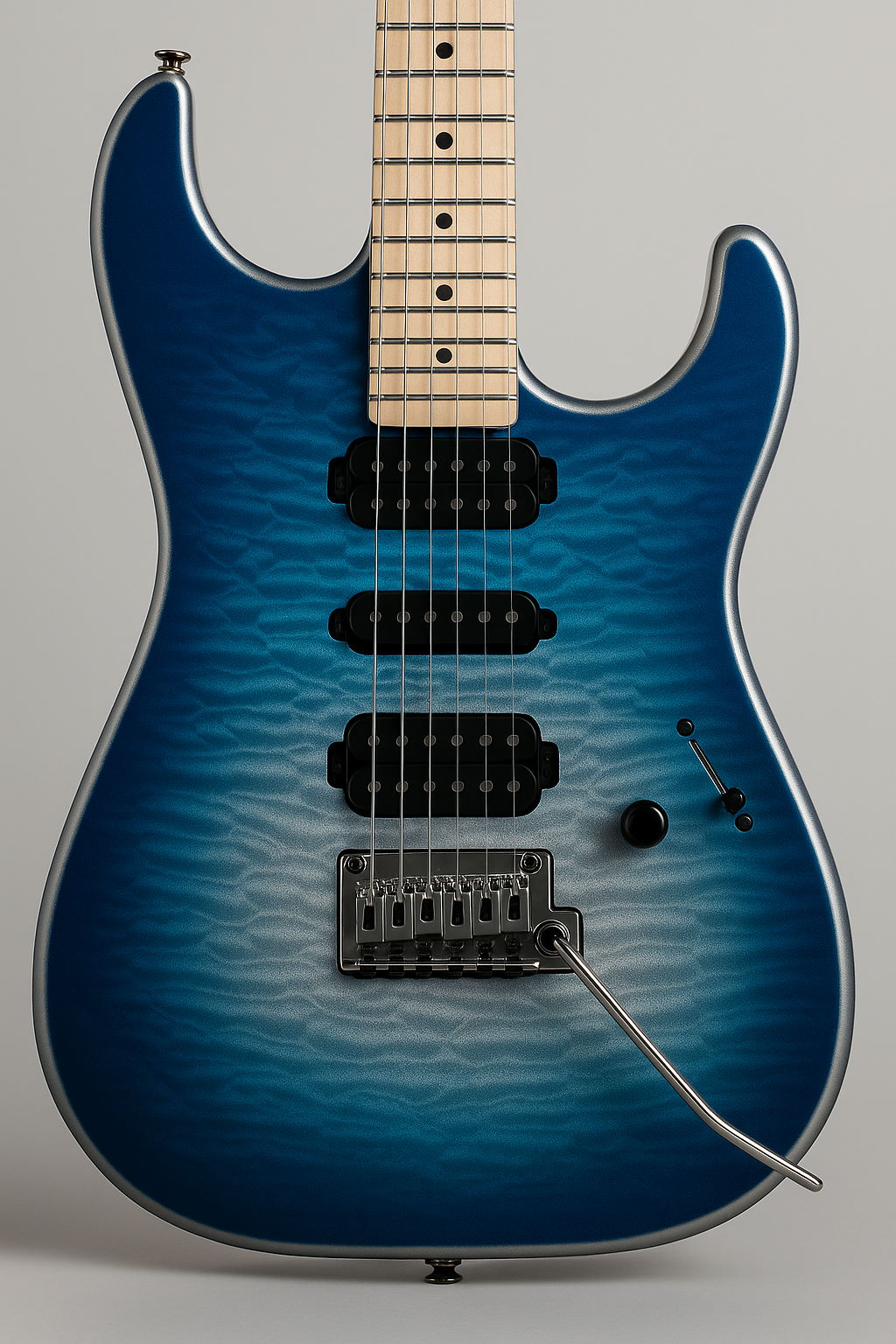
Mythic Valkyrie Electric Guitar – Modern Super Strat – Dual Humbucker – USA Made
The Mythic Valkyrie Electric Guitar is designed for players seeking speed, precision, and a wide tonal range. With its dual humbucker pickups, custom 10-position selector, and coil-splitting capabilities, it offers versatility for various musical styles. The guitar's high-quality construction, including a solid alder body and a fast neck, supports aggressive playability and ensures tuning stability during intense performances.
View Product